
Electronics cooling
Raspberry Pi 5 cooling.
Compare component temperatures and airflow with and without the Active Cooler, using real simulations from the Vanellus API.
- 8.6 W board power
- 20°C ambient air
- CHT + RANS heat transfer and flow
01 / Natural convection
Bare board
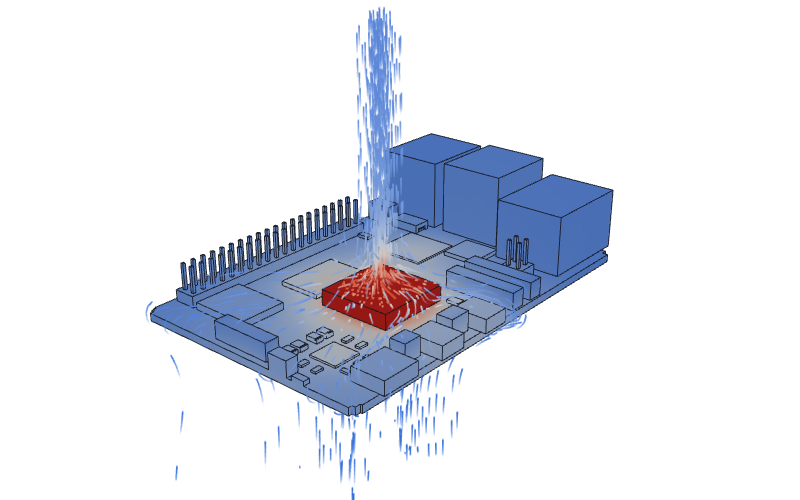
20°C288°C
02 / Forced convection
With the Active Cooler
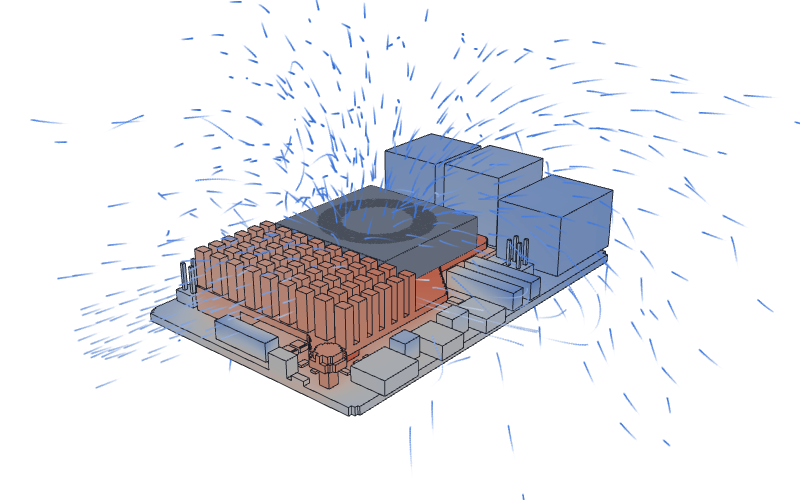
20°C77.1°C
Colours show temperature, with a separate scale for each view. This is an illustrative fixed-power model; a real board would throttle before reaching the bare-board temperatures.
Run it yourself
Start with the complete case.
The guide’s Python package includes both configurations, STEP geometry, materials, and a short setup README. Add your API key to run the cases or adapt the design.
Full walkthrough, assumptions, and results →